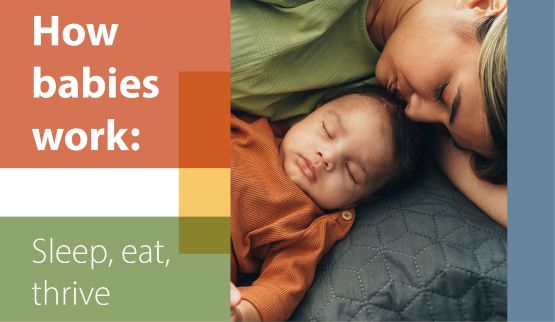
We will discover how the evolutionary history of humans affects the current feeding and sleeping needs of babies, and explore the biological explanations for typical baby sleep behaviours. Why do newborns prefer to sleep on their parents’ bodies? Why do they feed so much at night? Do we need to teach babies to sleep? Why do they seem to wake so easily, and why do they need so much sleep? In this talk you will learn about newborn babies’ instinctive behaviours, the biology of milk production, the homeostatic sleep regulators, and infant sleep architecture, allowing you to understand the ‘hows and whys’ of infant sleep behaviour.
IBLCE Content Outline: V Psychology, Sociology & Anthropology
Breastfeeding problems are intimately connected with infant cry-fuss problems. Both breastfeeding problems and unsettled infant behaviour are linked with increased risk of maternal postnatal depression and also suboptimal developmental outcomes. And breastfeeding or feeds are intimately related to how a family approaches infant sleep. For these reasons, a mother and baby are best thought of as a complex adaptive system or CAS, which is nevertheless remarkably resilience. The mother-baby CAS is nested inside multiple other CASs (like the parenting team, the family, or social networks) and made up of multiple other CASs (like the maternal entero-mammary immune system or the infant gut microbiome). Breastfeeding and infant care problems emerge from multiple factors which interact and co-evolve in the mother-baby CAS, and require evidence-based clinical approaches integrated across multiple domains. However, parents report that when they present with problems of breastfeeding, sleep, or crying they receive large amounts of conflicting and unhelpful advice. Parents are frequently offered a range of ‘quick-fix’ solutions. It’s not surprising that rates of overdiagnosis and overtreatment of breastfeeding mothers and babies have increased dramatically in recent years - without improved breastfeeding rates, or decreased reports of sleep or cry-fuss problems. What are the paths forward for health professionals who care for breastfeeding mothers and their babies?
IBLCE Content Outline: I, V, VII
I Development and Nutrition
V Psychology, Sociology & Anthropology
VII Clinical Skills
Sharing a sleep surface remains common despite dominance of risk elimination approaches directing parents to not co-sleep under any circumstances. Many families struggle to follow rigid risk elimination guidelines and want and/or need to keep their baby close; risk minimisation has been posed as an alternative. Carly shares the results of an integrative review addressing the research question: ‘What information do parents need to minimise risk if they have an infant under 12 months of age who shares the same sleep surface, intentionally or not?’
IBLCE Content Outline: V, VII
V Psychology, Sociology & Anthropology
VII Clinical Skills
The first year after birth can be a period of profound transition, where mothers may experience complex mental health and psychosocial challenges. Factors such as postpartum depression, anxiety, trauma related to pregnancy or birth, social isolation, financial stress, and lack of accessible support can all contribute to maternal distress, which in turn can affect infant development and early attachment. Early intervention and consistent support for mothers during this critical period are essential to promote both maternal recovery and positive infant outcomes. Peer support, delivered by individuals with lived experience of perinatal mental health challenges, provides an accessible and trusting pathway for mothers to seek help. “Peer support in the perinatal period is described as an effective, positive, dependable support for women, helping them to overcome health care system barriers that contribute to mental health problems and improve ability to access mental health support” (Rice et al., 2022). By fostering connection, understanding, and a sense of safety, peer support enables mothers to engage with services, build confidence, and strengthen early parent-infant relationships. This presentation will explore practical strategies for supporting mothers with infants who face complex mental health and psychosocial needs, including early identification, wrap-around care, and approaches that promote infant wellbeing alongside maternal recovery. Case examples from Peach Tree will illustrate how structured support, relationship-building, and co-designed programs can improve outcomes for both mothers and their infants during the critical first year.
IBLCE Content Outline: V Psychology, Sociology & Anthropology
Infant sleep is often framed through behavioural expectations of independence, yet research shows limited effects of behavioural sleep interventions on infant sleep outcomes (Douglas and Hill, 2013; Liu et al., 2023). Lyons-Ruth et al. (2024) highlight that infants vary widely in their stress thresholds and depend on caregiver co-regulation to downshift from arousal. These insights help explain why some infants, including those with more sensitive neurobiological profiles, rely on close contact or feeding for settling and sleep. Neurodiversity-affirming frameworks further emphasise co-regulation, sensory needs, and goodness-of-fit rather than normalisation (Leadbitter et al., 2021). This presentation integrates these perspectives to outline more responsive, ethical, and developmentally aligned approaches to infant sleep.
IBLCE Content Outline: V Psychology, Sociology & Anthropology
Bed-sharing and co-sleeping were my major research obsessions for the first 20 years of my career. This talk will give an overview of the key research findings around co-sleeping and bed-sharing, and how understanding and guidance has progressed. Then we will consider some of the intractable questions that parents often want answers to: can you safely co-sleep with your baby on your chest? When is my premature baby old enough to bed-share? If my husband smokes but showers before bed, can he bed-share with us? What about vaping and bed-sharing? How can I co-sleep with my newborn twins? After this presentation you will have all the answers about co-sleeping and bed-sharing at your fingertips!
IBLCE Content Outline: V Psychology, Sociology & Anthropology
This talk introduces you to Eyes on the Baby -- a training and implementation programme to engage the multiagency workforce in supporting vulnerable families to reduce sudden unexpected infant deaths (SUDI). We designed and implemented Eyes on the Baby with Durham County Council in 2022, and subsequently it has been adopted by local authorities across northeast England, plus Durham Constabulary and North East Ambulance service. Providing targeted information and support Eyes on the Baby trains staff who have existing relationships or opportunistic contact with priority families to be aware of circumstances where babies have died unexpectedly, when families are out of routine, when parents are facing multiple challenges, and when babies’ needs may be overlooked in a crisis. From this talk you will gain a sound grasp of how multiagency SUDI prevention works and how to engage non-health professionals in this challenging work.
IBLCE Content Outline: V Psychology, Sociology & Anthropology
Sleep matters! At least one in four parents describe significant sleep problems in the first year of life; infant sleep problems increase risk of postnatal depression; and parent reports of infant sleep problems are linked with developmental challenges in later childhood. Yet graduated extinction approaches (developed from first wave behaviourism or FWB) have been dominant in our Western health system response to infant sleep challenges since the 1950s and 1060s - despite profound theoretical flaws, and multiple systematic reviews showing they don’t decrease frequency of night waking. In this talk, Pam shows how socioculturally normalised FWB approaches create parent-baby communication confusion, disrupt family wellbeing, and increase frequency of night waking. She describes the development of The Possums Baby and Toddler Sleep Programs (PSP) and Sleep, Baby & You (SBY) using implementation science. PSP comprises the sleep domain of Neuroprotective Developmental Care (NDC or The Possums Programs). Pam discusses the NDC Contextual Model of Infant Sleep (NDC-MIS, published 2014, 2023) which argues that a holistic educational and clinical approach to infant sleep can only be offered in the context of the biological system of the parent and infant, that is, in the context of breastfeeding, sensory motor development, and parent mental health and emotional wellbeing. The NDC-MIS integrates second and third wave behaviourisms with lactation science, including strategies from Cognitive Behavioural Therapy for Insomnia. Clinical translation of NDC-MIS into PSP has also integrated strategies from (what were in 2011) novel theoretical frames, including circadian medicine, nature and social prescribing, and balanced time perspective. Finally, Pam explores what a pragmatic pathway forward towards broader health system adoption of genuinely evidence-based and holistic support for family-infant sleep might look like.
IBLCE Content Outline: I, V, VII
I Development and Nutrition
V Psychology, Sociology & Anthropology
VII Clinical Skills
This presentation explores current approaches to infant safe sleep education and examines how these approaches are experienced by culturally diverse families who choose to, or unintentionally, bed-share with their infants. It will consider how cultural beliefs and traditions shape sleep expectations and practices, and how these intersect with mainstream recommendations. The presentation will conclude with key insights and practical recommendations for collaboratively engaging bed-sharing parents from diverse cultural backgrounds in discussions around infant safe sleep.
IBLCE Content Outline: V, VII
V Psychology, Sociology & Anthropology
VII Clinical Skills
The perinatal period is one of the most common windows in which adults first recognise their own neurodivergence. As identity shifts, sensory demands intensify, and support needs become more visible, many parents begin to connect the dots between lifelong patterns and their current experiences. This presentation explores what neurodivergence can look like in the perinatal context. Drawing on neurodiversity-affirming practice, Rebecca will outline how neurodivergence can present in the perinatal period in mothers, non-birthing partners, and babies. The presentation will also examine common challenges uniquely experienced by neurodivergent parents and their babies, including feeding and sleep overwhelm, sensory overload, co-regulation mismatches, burnout, and difficulty navigating competing advice. Participants will leave with a strengths-based framework for identifying neurodivergent needs, adapting support, and fostering affirming, accessible perinatal care that helps neurodivergent parents and babies thrive.
IBLCE Content Outline: V Psychology, Sociology & Anthropology
While there is a plethora of safer sleep guidance available when babies sleep on a firm flat surface, there is much less information about how to ensure sleep safety when babies sleep in carrying devices such as slings, wraps and structured carriers. Following a couple of accidental infant deaths in carriers in recent years my team conducted a project on sling use in the UK. In this presentation Helen will share the results of a systematic review on evidence about sling safety, a large parent survey about their use of different wearable baby carriers, and their knowledge around safe carrying practices, and a review of safety guidance available to the public via babywearing organisations, sling and carrier manufacturers, and retailers. By attending this presentation, you will learn about how the new UK guidance on safe sling use for babies was agreed, and the evidence that underpins it.
IBLCE Content Outline: V Psychology, Sociology & Anthropology
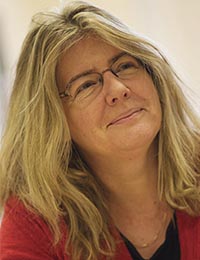
Helen Ball
Dr Helen Ball is professor of anthropology and director of the Infancy & Sleep Centre (DISC) at Durham University. She founded Basis, the Baby Sleep Information Source in 2012 as an outreach project of DISC, for which she was awarded the Queen’s Anniversary Prize for Further & Higher Education in 2018. Her research examines the sleep ecology of infants and their parents including attitudes and practices regarding infant sleep and sleep safety, behavioural and physiological interactions of infants and their parents during sleep, infant sleep development, and the discordance between cultural and biological sleep needs. Much of her research has focussed on bed-sharing and breastfeeding. She has conducted research in hospitals, the community, and her lab, and she contributes to national and international policy and practice guidelines on infant care. Helen served as a board member of ISPID (International Society for the Study and Prevention of Infant Deaths) from 2018 to 2022, is chair of the grants/research committee, and a member of the scientific advisory group for the Lullaby Trust, and serves on the qualifications board for Unicef UK Baby Friendly Initiative. She was also an associate editor for Sleep Health, journal of the US National Sleep Foundation 2020-2024 (all voluntary positions). She is author of the book How Babies Sleep.

Pamela Douglas
Dr Pamela Douglas is a GP and researcher who has been practicing breastfeeding medicine since she first qualified as an International Board Certified Lactation Consultant in 1994. She is a Fellow of the Academy of Breastfeeding Medicine and Associate Professor Adjunct with the School of Medicine, Griffith University, with about 30 peer-reviewed research publications. Using the principles of implementation science, Pam has translated extensive interdisciplinary evidence into development of the Possums (or Neuroprotective Developmental Care) programs. They include The Possums Baby and Toddler Sleep Program (from 2011); the Possums 5-domain approach to infant cry-fuss problems (from 2011); NDC Masterclasses and Accreditation (from 2018); and the Lactation Fellowship (from 2025). She is also author of The Discontented Little Baby Book, available in English, Dutch, and Italian.

Carly Grubb
Carly Grubb is an experienced consumer advocate with a background in Primary Education. She is a confirmed HDR candidate with the School of Health, University of the Sunshine Coast and her research project will focus on the co-design and testing of parent-facing educational resources, developed in collaboration with families, health professionals, and other key stakeholders. These resources will be accessible, relevant and family-centered, addressing safer sleep practices - including shared sleep - in ways that reflect the diverse needs and contexts of families. Carly is a skilled communicator, founding and leading the Australian-registered charity, Little Sparklers, which runs a large online peer support group (The Beyond Sleep Training Project; >195,000+ members) serving parents with young babies and toddlers. She has previously engaged with communities (on-line and in person) in participatory approach activities including co-design to co-create resources for each community’s unique needs, e.g. realistic expectations for infant and toddler sleep and a partner’s guide to support a breastfeeding mother’s sleep. Carly is a parent representative on the Australian Government’s Parents and Carers Reference Group, is a member of the Raising Children Network Parent and Carer Panel and is an active participant in the Thriving Queensland Kids Partnership as part of her role with Little Sparklers. Carly also participated as the consumer representative for Little Sparklers during the co-design of the Queensland Clinical Guidelines for Safer Infant Sleep.

Levita D’Souza
Levita is a registered Counselling Psychologist and Lecturer within the Faculty of Education at Monash University. Her research interests are in the area of perinatal psychology, adverse childhood experiences and its impact on attachment patterns and subsequent parenting practices. Within this space, her current research projects are looking at fathers transition to fatherhood, father’s engagement in night-time infant care, and factors influencing parenting choices in relation to night-time infant care and uptake of safe sleep messages.

Rebecca Cefai
Rebecca is a perinatal and child psychologist with over 10 years clinical experience working with children and families. She currently works in solo private practice at Growing Gently Psychology in the Blue Mountains NSW. Rebecca offers a compassionate and honest perspective to neurodivergence and parenting, drawing from her lived experience as a neurodivergent mother of 3 young children. Rebecca has been on both sides of medical appointments, IEP meetings, diagnostic assessments, therapy and shopping centre meltdowns, offering valuable insights to parents, health professionals and educators.

Jessica Guy
Dr. Jessica Guy is a child development PhD, former sleep scientist, and certified infant and family sleep specialist. Drawing on her background in developmental psychology research and lived experience as an ADHD parent to a neurodivergent child, Jess brings both scientific depth and personal insight to her work. She’s passionate about reframing infant and paediatric sleep through a neurodiversity-affirming lens that values connection, regulation, and individuality.

Louise Herbert
Louise Herbert is an author and paediatric sleep and development specialist, accredited in sleep science, perinatal-infant mental health, and infant feeding. She is the founder of Mother Nourish Nurture, a trusted platform supporting families with gentle, evidence-based guidance through the early years. Louise also leads an internationally recognized certification program for professionals working with babies, toddlers, and families. Her work is redefining how infant sleep is understood, centring biological norms and the transformative power of nurture. She lives by the ocean with her husband and two children, and continues to advocate for care that is both grounded in science and attuned to the emotional reality of parenthood.
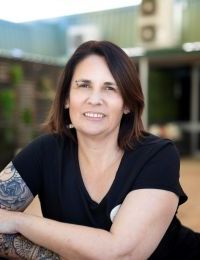
Vivianne Kissane
After her own personal experience with perinatal mental illness and losing a family member to maternal suicide, Viv founded Peach Tree Perinatal Wellness in 2011. Since then, she has been using her lived experience to raise awareness of perinatal and infant mental health and wellbeing. Peach Tree is a not-for-profit organisation based in Queensland which aims to improve early life, and early parenting experiences. Under Viv’s leadership Peach Tree has grown into a thriving organisation offering services from Cairns to Gold Coast, operating seven Parent Wellbeing Centres and proudly stands as the largest employer of perinatal mental health peer workers in Australia. Viv has been involved in consumer representative work and has contributed extensively to systemic advocacy and consultation work in governance and strategy at National, State and local levels. In 2022, Viv received an Order of Australia medal for her work in community mental health.
 US/USD