
When offering support and advice to women who are breast feeding, it’s vital to have a sound understanding of breastfeeding physiology. This presentation will draw on the instructional animation, “Breastfeeding hormones in Play” as a foundation to explore how breastfeeding physiology translates to clinical practice when supporting women to breastfeed.
The #1 cause of early weaning and formula supplementation is worries about milk production. This presentation describes insights and teaching tools (some newly developed) that lactation supporters can use to help more families better understand milk production and the impact of their choices on their ability to meet their long-term feeding goals. Includes basic milk production dynamics, their impact on engorgement and oversupply, special considerations for families with multiples and employed parents, as well as those exclusively pumping, relactating, and inducing lactation.
Expressing with an electric pump can be a great tool for increasing and maintaining milk supply where the baby is unable or unwilling to do so themselves. Those who choose to exclusively express, or who are perhaps ‘forced’ to do so due to circumstances, may only represent a small portion of the breastfeeding population, but they also deserve to be provided with good knowledge and support. There is not much evidence for the how and what of expressing and so a lot can be gained from listening to the experiences of those who are living through it. In this presentation we will explore how to support a mother to increase and maintain her supply long term, finding the right size flange, the emotional experience of expressing and how to support this, and dispel a few myths surrounding expressing.

Justine van der Watt
Justine is a nurse, midwife and IBCLC. She has extensive experience working in NICU and privately as a midwife and lactation consultant. Despite being a midwife and working in NICU at the time of her daughter’s birth 12 years ago she realised she had limited breastfeeding knowledge and knew even less about expressing. She ended up exclusively expressing for her daughter for 10 months. During this time, she learnt a lot of information, mostly from a peer-to-peer Facebook group, not any of the 5 IBCLCs she saw - which she credits for quadrupling her output. She started her business in early 2016 with the aim to make expressing easier for the mothers of Australia. Since then, the business has evolved, and she now blends private practice as an endorsed midwife and IBCLC with the expressing information and products, while continuing her work in NICU as a nurse midwife and lactation consultant, and as a university lecturer for undergraduate nurses. She has developed a reputation throughout Australia and New Zealand as a leader in flange sizing. Outside of her professional life, Justine is a lover of coffee and an avid traveller.
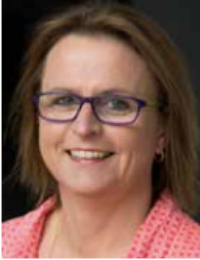
Nicki Hartney
Nicki has been a midwife for over 30 years. She became a lactation consultant in 1997, maintaining this credential until 2016. At this time, her midwifery educator role in a large regional teaching hospital eventually led her to academia, when she began her role as a lecturer and course director in Midwifery at Deakin University. She continues to draw on her lactation skills and knowledge inspiring the next generation of midwives in this current role.
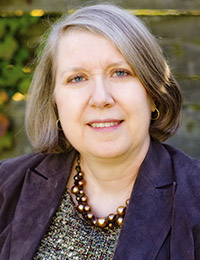
Nancy Mohrbacher
Nancy began helping nursing families in 1982 as a volunteer peer supporter. She became an IBCLC in 1991 and spent 10 years growing a large private lactation practice in the Chicago area, where she worked one-on-one with thousands of families. Nancy is the author or co-author of three current books for nursing parents and two for lactation specialists, including her 2020 textbook, Breastfeeding Answers (2nd ed). Her Breastfeeding Solutions app is used worldwide, and her YouTube channel has millions of views. She currently creates innovative lactation education for aspiring and recertifying lactation consultants online at LactaLearning.com and speaks at events internationally. Nancy was in the first group of 16 to be honoured for their contributions to breastfeeding with the designation FILCA, Fellow of the International Lactation Consultant Association.
 US/USD