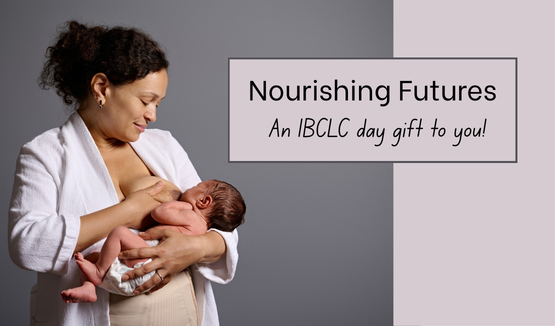
Health-care professionals (HCP) have a responsibility to protect and promote maternal and infant health and breastfeeding is one of the most effective measures to support this. Increasing breastfeeding rates in Australia is crucial to improving population health, but the absence of robust policies, programmes and education for HCP undermines this effort. The pervasive marketing of commercial milk formulas (CMF), including practices that are inconsistent with the International Code of Marketing of Breast-milk Substitutes (WHO Code), has introduced significant conflicts of interest through sponsorship of HCP and their organisations. These conflicts can distort clinical practice, education, research and guidelines developed in the infant feeding domain. This is a call to action to all HCP to seek independence from the CMF industry and to actively support breastfeeding in their practice.
IBLCE Detailed Content Outline: VII Clinical Skills
The first 1000 days of life—from conception to age two—are a critical period for shaping lifelong health. Nutrition and lactation are key to programming metabolic, immune, and neurodevelopmental outcomes. This presentation highlights new research on the connection between maternal nutrition, human milk composition, and infant development. Participants will learn practical tools for incorporating nutrition and lactation science into clinical practice, helping families succeed during this essential time.
IBLCE Content Outline (I, V, VII)
I Development & Nutrition
V Psychology, sociology & Anthropology
VII. Clinical Skills
Human milk contains a living microbiome that supports infant gut and immune development. Current research shows that milk delivers bacteria, prebiotics, and immune factors that shape early colonization and influence long-term health. This presentation reviews the composition of the milk microbiome, its functions, and the factors that alter it. Key influences include birth mode, maternal diet, antibiotic exposure, and feeding method. The session explains how direct breastfeeding supports microbial transfer and how milk handling affects microbial diversity. Clinical guidance for IBCLCs focuses on protecting this ecosystem through evidence-based practices that support maternal health, responsive feeding, and safe milk management. Emerging studies highlight links between milk microbiome diversity and risks of allergy, obesity, and inflammatory disease. Attendees will gain practical tools to support families and understand the growing science behind the human milk microbiome.
After this presentation, participants will be able to:
IBLCE Detailed Content Outline: I, IV, V, VI, VII

Ashley Robinson
Dr Robinson has been in private practice as an IBCLC for three years. She finished her training in 2020 while simultaneously completing her Doctorate of Public Health, concentrating on epidemiology and lactation. She is also a certified labor doula through the Childbirth and Postpartum Association (2022), a certified lactation educator through the Childbirth and Postpartum Association (2021), and an internationally certified health coach through the Institute for Integrative Nutrition (2019). In her private practice, she primarily focuses on lactation care for infants, specializing in tethered oral ties.

Jimi Francis
Dr Jimi Francis became an IBCLC in 1993. She completed a Master of Science degree in nutrition with a focus on infant nutrition at the University of Nevada in Reno and completed a doctoral degree in nutrition at the University of California in Davis. Jimi completed her Dietetics Internship through the University of Iowa with a Fellowship at the 96th Medical Group at Eglin Air Force Base. Currently, Dr Francis is an assistant professor at the University of Texas, San Antonio in the Dept of Kinesiology. She has a private practice as a lactation consultant/nutritionist and serves as a trainer for the Texas Dept of State Health Services Advanced Lactation Management Training for healthcare providers.

Nicole Bando
Nicole is an advanced accredited practising dietitian and IBCLC who works in private practice. She has a special interest in early life feeding and evidence-based, sustainable nutrition to support optimal growth, that meets a family at their unique needs. Nicole has extensive community and national level advocacy experience, frequently commenting in the media (TV, radio, and print), and as a regular presenter to medical and allied health colleagues. As convenor of the Dietitians Australia Paediatric and Maternal Health Interest Group and Co-Convenor of the Nutrition & Breastfeeding Working Group, Nicole advocates for policy implementation that protects and promotes breastfeeding to support maternal and infant health.
 US/USD