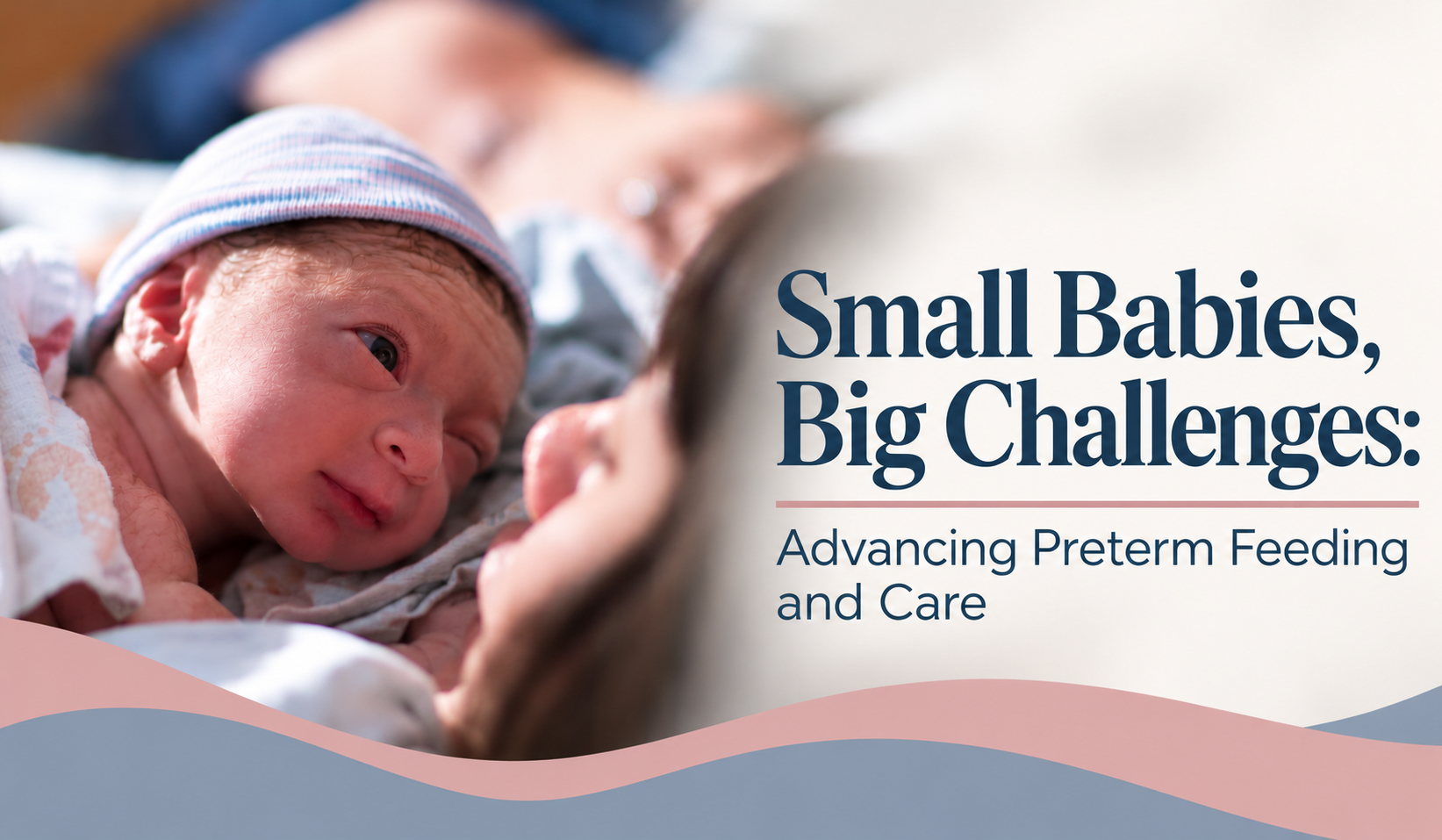
Direct breastfeeding of preterm infants in neonatal intensive units is frequently delayed and shaped by multiple factors, including infant immaturity, physiological instability, and medical complications. Prolonged separation between infants and parents often delays skin-to-skin contact and milk expression, leading to heightened stress and anxiety. Furthermore, many neonatal units maintain rigid feeding schedules focused on precise milk volumes and intake, leaving mothers with few opportunities to build confidence in direct breastfeeding. The lack of single-family rooms in most units further compounds the issue. In this presentation, Constance will explore the key barriers and facilitators to establishing direct breastfeeding for preterm infants.
Nurturescience is derived out of the latest in developmental neuroscience, and the key aspects that constitute nurture will be presented, followed by the adverse consequences of maternal-infant separation. The key deliverable is that Zero Separation optimizes the development of resilience. This is also the underlying theoretical and scientific rationale for the Immediate Kangaroo Mother Care Study (iKMC) and the Immediate Parent-Infant Skin-TO-Skin Study (IPISTOSS), which will be described. The results are profoundly challenging to the current paradigm of health care. The World Health Organization identifies this as needing a radical rethink in how perinatal care is provided, and has presented new policies, position paper and implementation strategy documents. These have not been widely adopted, so this is discussed and a way forward suggested.
Late preterm infants (34–36 6/7 weeks gestation) represent a unique and often vulnerable population whose neurodevelopmental immaturity can significantly impact feeding success. Although they may appear physiologically stable, subtle differences in brain organization, state regulation, muscle tone, and suck–swallow–breathe coordination can create complex breastfeeding challenges that are frequently underestimated. This presentation explores the neurodevelopmental foundations of breastfeeding in late preterm infants, translating current neuroscience and developmental care principles into practical bedside strategies. Participants will examine how brain maturation influences feeding readiness, endurance, behavioral cues, and maternal–infant interaction. The session will also address common barriers to breastfeeding in this population, including fatigue, dysregulated states, and inefficient milk transfer. Throughout this presentation, attendees will gain tools to assess feeding competence, support neuroprotective care, and coach families effectively. By integrating neurodevelopmental science with lactation support, clinicians will be better equipped to promote safe, successful, and sustainable breastfeeding outcomes for late preterm infants and their families.
Human milk is a critical nutritional and immunologic therapy for premature infants, yet providing human milk is not synonymous with establishing breastfeeding. In the NICU, expressed milk may be collected, fortified, and successfully delivered while opportunities for an infant to develop familiarity with the breast, feeding readiness, latch, milk transfer, and coordinated breastfeeding skills remain limited. For families whose goal includes direct breastfeeding, this distinction matters. This presentation examines breastfeeding the premature infant as both a developmental process and an interdisciplinary clinical pathway. Participants will explore how physiologic immaturity, parent-infant separation, maternal milk supply, feeding practices, NICU workflow, and team communication can influence breastfeeding progression. Particular attention will be given to opportunities that begin before nutritive feeding, including skin-to-skin care, sensory exposure, non-nutritive breastfeeding, and individualized assessment of feeding readiness. Using the P.A.T.H. framework—Protect milk supply, Activate the breast relationship, Trial nutritive feeds, and Help the dyad transition—the session will provide a practical approach for supporting breastfeeding from NICU admission through discharge and into outpatient care. Participants will also consider how interdisciplinary teams can align feeding goals, use supplementation without losing sight of breastfeeding goals, and create discharge plans that support continued feeding development after hospitalization. Ultimately, the session challenges clinicians to move beyond asking whether a premature infant received human milk and consider whether families who desire breastfeeding were given an intentional, developmentally appropriate opportunity to pursue it.
Even the most medically vulnerable newborn has a voice. Through their movements, expressions, gaze, physiological responses and moments of stillness, infants communicate their experiences and needs. Yet in the technologically complex neonatal environment, these signals can be difficult to recognise and respond to. Drawing on doctoral research exploring the lived experiences of hospitalised newborns, this presentation invites participants to consider neonatal care from the infant’s perspective. It explores how separation, the sensory environment and everyday clinical interactions shape opportunities for connection, and how parents and clinicians can support regulation and relational safety. Particular attention is given to recognising infant behavioural cues, strengthening parent-infant connection and creating moments of attuned, responsive care. Participants will be encouraged to consider practical ways of integrating an infant mental health and early relational health perspective into everyday neonatal practice, including care that supports parents in getting to know and responding to their baby.
Increasing the amount of “mother’s own milk” provided to babies in neonatal units, particularly those who are very preterm or very low birthweight, is an international clinical and research priority due to the large health impacts for these babies. Success in milk expression, as personally defined by families, is also important psychologically after pregnancies and births that are often traumatic and marked by a loss of control, with feelings of guilt. However milk expression in this context is extremely challenging and there is high risk of low milk supply and non-exclusive “mother’s own milk” provision with psychological distress. This presenatation will go through the various ways to improve outcomes and discuss the levels of evidence available to support them.
The transition from tube feeding to full oral feeding is a significant developmental milestone for premature infants. Successful feeding depends on the maturation and coordination of complex neurological and physiological processes, including sucking, swallowing and breathing. This presentation will explore the development of oral-motor feeding skills from fetal life through to term-equivalent age, highlighting factors that influence feeding readiness and competence. Particular attention will be given to suck–swallow–breathe coordination and practical strategies to support safe and effective feeding. Current approaches to achieving full oral feeding will be reviewed, including non-nutritive sucking, the Canadian-developed SINC feeding algorithm, and cue-based or semi-demand feeding. Emphasis will be placed on individualised feeding progression guided by infant readiness, physiological stability and behavioural cues.
In this presentation, Dr Gillian Opie will introduce the challenges and facilitators to breastfeeding the preterm infant. Psychosocial factors influencing breastmilk production and continuation for mothers whose infants are born prematurely will be discussed. Techniques used to transition the preterm infant from oro-gastric feeding to direct breastfeeding will be presented. Value of supportive influences of partners, family and healthcare professionals will be highlighted.
The Supporting and Enhancing NICU Sensory Experiences (SENSE) program was developed in 2017 over the course of several years using a stepwise, systematic, and scientific process. The SENSE program is a comprehensive approach to ensure appropriate multi-modal positive sensory exposures across hospitalization for high-risk infants in the NICU. The intervention strategies include tactile (kangaroo care, holding, hand hugs, and massage), auditory (language, music, and voice), olfactory/gustatory (breast milk and parent scent), visual (cycled light, enface positioning to focus and follow parent face), and kinesthetic (movement, position changes, and rocking). The core concepts of the program are that it is evidence based, the interventions change across postmenstrual age, there are specific target amounts each day, interventions are done in a way that respond to the infant’s behavioral cues and what their current needs are, parents are the ideal providers of positive sensory exposures, and simple low-cost exposures can be integrated into the daily NICU flow. The SENSE program is not a commercial endeavor, but is made available to other hospitals ‘at cost’, with more than 600 hospitals implementing it. During this presentation, we will discuss the rationale for optimizing the NICU environment, identify the components of the SENSE program, and discuss implementation factors across different NICUs. We will conclude this presentation by identifying research that has been conducted on the SENSE program across different locations in addition to discussing future research directions.
Music therapy in the neonatal intensive care unit (NICU) is a specialised area of clinical practice that focuses on the safe and developmentally supportive use of music and voice with premature and medically fragile infants. It takes into consideration the individual needs of the infant, their family and the neonatal environment, and is grounded in developmentally informed and family-centred clinical frameworks. This presentation will explore the clinical foundations and objectives of NICU music therapy, including its potential role in supporting infant development and regulation, parent–infant relationships and overall family wellbeing. Drawing on foundational and current research and clinical practice, it will explore the importance of individualised, evidence-based interventions, with particular consideration of infant readiness, physiological stability, behavioural cues, sound exposure and the neonatal auditory environment. The presentation will also consider how neonatal healthcare professionals can incorporate their voices and music into everyday care and interactions to support infants and families, particularly when a music therapist is not available. It will explore practical ways of using voice and music within everyday neonatal care, while recognising the distinction between supportive bedside practices and specialist music therapy. Finally, the presentation will explore the Australian context and ongoing development of NICU music therapy, including the development and evaluation of the clinical program at Mercy Hospital for Women. This will provide an opportunity to consider the role of multidisciplinary collaboration in establishing and developing music therapy programs within neonatal settings.
Breastfeeding for preterm infants has many advantages over breast milk feeding by bottle. Neo-BFHI (Baby- Friendly Hospital Initiative targeted to neonatal units) advises the use of alternatives to bottle feeding in preterm infants at least until breastfeeding is well established. Cup-feeding is one such alternative that is the standard of care in many developing countries with high breastfeeding rates, but is not widely practised in Australia. We conducted a study designed using questionnaires based on the Consolidated Framework for Implementation Research (CFIR) model. The aim was to explore the use of cup-feeding in Australian neonatal units along with staff and parent views on its use, with reference to BFHI standards, at Mercy Hospital for Women (MHW), Melbourne in the initial planning step for a possible practice change.
Three core principles must underpin every aspect of neonatal care to maximise its value for infants, families, professional caregivers and institutions. Five practical steps put these principles into action in every caregiving activity. Together, they form the foundation of infant- and family-centred developmental care (IFCDC), which protects and enhances neurodevelopment by minimising harm from separation, trauma, stress, pain and inappropriate sensory experiences. IFCDC is a “wicked problem”: an ongoing challenge with no end point. Policy and funding alone cannot achieve it; progress depends on many small successes driven by the imagination, commitment and creativity of individuals applying these three principles and five steps in their daily practice.

Nils Bergman
Dr Nils Bergman calls himself a Public Health Physician, and currently promotes and researches skin-to-skin contact on a fulltime basis. He is a Research Associate at the Karolinska Institute, Sweden. Dr. Bergman was born in Sweden and raised in Zimbabwe, where he also later worked as a mission doctor. He received his medical degree (MB ChB) at the University of Cape Town, a Diploma in Child Health at Uppsala University, and later a Masters in Public Health at the University of the Western Cape. During his years in Zimbabwe he completed a doctoral dissertation (MD, equivalent to PhD) on deadly scorpion stings. He has worked in South Africa, Zimbabwe and Sweden, and his last posting was Senior Medical Superintendent of Mowbray Maternity Hospital in Cape Town, overseeing 18000 births per year. He now lives in Sweden with his wife, three children and six grandchildren.
Gillian Opie
Gillian is a consultant neonatologist of over 25 years experience. She has been an IBCLC since 1997 with a particular interest in supporting mothers breastfeeding their preterm infants. She has been an active member of the Victorian Infant Collaborative Study group (VICS) undertaking long-term neurodevelopmental follow-up of infants born extremely preterm and of extremely low birthweight. Other research interests include probiotics (Proprems trial). Caffeine for Apnoea of Prematurity (CAP trial), High Dose Docosahexanoic Acid and Preterms and Diabetes and Antenatal Milk Expressing (DAME trial). In 2011 Gillian was instrumental in establishment of the Mercy Health Breastmilk Bank. She continues to be a board member of the International Breastfeeding Journal.

Ilana Levene
Ilana Levene is a neonatal doctor working in Oxford, England. She recently completed a PhD at the University of Oxford exploring the dynamics of breastmilk expression after very preterm birth. Her research interests are lactation, neonatal nutrition and perinatal equity. She co-chairs an advocacy and knowledge-sharing organisation called the Hospital Infant Feeding Network. She was on the steering group of two Quality Improvement Toolkits on optimising maternal breastmilk after preterm birth, with the British Association for Perinatal Medicine.

Ranmali Rodrigo
Ranmali Rodrigo, is a neonatologist at Mercy Hospital for Women in Melbourne whose special interest is neonatal nutrition. Her postgraduate training in Neonatology was in UK, Sri Lanka and Australia and being an IBCLC, she is very keen to promote practices that support breast milk feeding and breastfeeding in the NICU and beyond. She obtained her PhD from La Trobe University Melbourne on mothers’ milk collection, storage and transport in a neonatal unit. Ranmali has wide experience in cup-feeding of preterm infants as it is frequently used in Sri Lanka and will discuss the feasibility of introducing this practise to Australian SCN/NICUs.

Constance Banks
Constance Banks has been an IBCLC since 1996 and a registered midwife since 1993. Originally from Germany, she trained as a nurse before studying midwifery in London and now lives in Melbourne, Australia. Constance has extensive experience in clinical lactation care, education, mentoring and the Baby Friendly Health Initiative. She currently runs her private practice, Nurture Heart and Soul Breastfeeding Support, and provides lactation care for a randomised controlled trial investigating breastfeeding and osteopathic manual therapy. Her special interests include newborn behaviour, early parent-child relationships, baby-wearing and holistic postnatal wellbeing. She has presented at international lactation conferences, and regularly provides education to parents and health professionals.

Sandra Cole
Sandra Cole is an internationally recognized expert in neonatal and lactation care and the author of Breastfeeding Challenges Made Easy for Late Preterm Infants: The Go-To Guide for Nurses and Lactation Consultants. Her second book, Milk Made Easy: The Science Behind Successful Lactation, is scheduled for release later this year. Sandra began her nursing career in the NICU in Canada in 1990. After relocating to the United States in 1992, she developed a distinguished NICU career across several states, rising to the highest levels of clinical nursing practice. She earned her High-Risk Neonatal Certification from the National Certification Corporation in 1993 and maintained it until 2022, after retirement from nursing. Through her work in NICUs across the United States, Sandra recognized that late preterm infants face unique breastfeeding challenges not seen in other gestational age groups. This insight led her to pursue certification as an International Board-Certified Lactation Consultant (IBCLC) in 2007. While continuing her NICU work, Sandra also built a private lactation practice specializing in late preterm infants. After moving to San Diego in 2010, she transitioned fully into lactation care, serving as a Lactation Consultant at Sharp Mary Birch Hospital for Women & Newborns, then advancing to Lead Consultant and Supervisor of the Lactation Department until her retirement in 2020. Sandra has presented webinars and spoken at conferences. She continues to consult selectively at the request of colleagues, physicians, and peers.
Jessica Daigle
Jessica Daigle is a board-certified pediatrician and neonatal hospitalist, speaker, educator, and founder of Mom & Me MD. Her work focuses on strengthening the continuum of care for infants and families from the NICU through the transition home. Dr Daigle brings both clinical expertise and lived experience to this work as the mother of a premature infant who spent five weeks in the NICU. Through education, advocacy, and family-centered care, she challenges healthcare professionals to look beyond milk provision alone and consider how clinical practices, interdisciplinary collaboration, and healthcare systems influence an infant’s opportunity to develop breastfeeding skills.

Natalie Duffy
Dr Natalie Duffy is a consultant neonatologist at Mercy Hospital for Women in Melbourne, Australia, and works in neonatal emergency retrieval with PIPER at The Royal Children’s Hospital. Her doctoral research at the University of Melbourne explored the lived experiences of hospitalised newborn infants, bringing together infant observation and the perspectives of parents and clinicians. Her work focuses on infant mental health, early relational health and the importance of recognising the infant as an active participant in care. She is a Newborn Behavioral Observations (NBO) trainer and faculty member of NBO Australasia, Royal Women’s Hospital, and contributes to multidisciplinary education, research and initiatives to embed infant- and family-centred developmental care in neonatal services. She was awarded a Creswick Foundation Fellowship to further this work internationally in 2027.

Michael Narvey
Dr Narvey began his training in Pediatrics at the University of Manitoba in Winnipeg where he completed a year of further training in Neonatology. This was followed by two years of Neonatal fellowship at the University of Alberta in Edmonton. Afterwards he began his career as a neonatologist in the same city and over the 6 years he spent there, his career included being both the fellowship program director and the medical director for a level II unit. In late 2010 he accepted a position in Winnipeg to become the section head of neonatology and held this role until January 2025. He is past chair of the Canadian Pediatric Society’s Fetus and Newborn Committee serving on the committee for 9 years. As of May 2026 he became the president elect of the Canadian Pediatric Society.

Roberta (Bobbi) Pineda
Bobbi Pineda served in NICU OT clinical roles from 1992-2006, gained experience as a NICU parent of a premature infant in 1998 and again in 2006, and now conducts clinical research in the NICU as an associate professor at University of Southern California. Her research largely aims to understand modifiable factors within the NICU environment that can improve outcomes. She is author of the Supporting and Enhancing NICU Sensory Experiences (SENSE) program and Neonatal Eating Outcome Assessment. She has authored more than 70 peer reviewed publications and serves on the Neonatal Therapy National Certification Board.

Inga Warren
Dr Warren is a senior NIDCAP trainer and the primary author and co-director of the international Family and Infant Neurodevelopmental Education (FINE) programme. Dr Warren was awarded a CBE for her exceptional contribution to the care of preterm infants. She has an Honorary Doctorate awarded by Oxford Brookes University and is a fellow of the Royal College of Occupational Therapists. Her career began as an occupational therapist working in mental health services including those for children and families. Later she transferred to acute and community paediatrics which took her to neonatology at St. Mary’s, now part of Imperial, where she established a pioneering role for neurodevelopmental therapies and set up the UK NIDCAP Training Centre. This led to the development of a more accessible programme which became Family and Infant Neurodevelopmental Education, which now has training centres in 15 countries on 4 continents providing education and training in over 25 countries. Dr Warren has been involved with national and international research projects and education networks, and has a particular interest in stress and pain management in the neonatal unit, including development of a scale (EVIN) for evaluating the quality of care given to infants during medical and nursing procedures. She writes books for parents and has contributed to the EFCNI European Standards of Care for Newborn Health and the Graven’s Standards for Infant and Family Centred Developmental Care.

Lauren Salib
Lauren Salib is a Registered Music Therapist with specialised training in NICU Music Therapy, Infant Mental Health and Newborn Behavioural Observations (NBO). She has extensive experience across paediatric, neonatal and community settings, including at The Royal Children’s Hospital.
In 2023, Lauren founded LA Therapy, providing clinical services, professional development and consultancy focused on neonatal care, infant neurodevelopment and perinatal and infant mental health. Her work supports infants and children with complex medical needs, strengthens parent–infant relationships and assists families through hospitalisation and early parenthood.
Through LA Therapy, Lauren leads a pilot NICU music therapy program at Mercy Hospital for Women, supported by the Miracle Babies Foundation, and holds an honorary research role at the hospital. The program explores the role of music therapy in infant development, physiological stability and family wellbeing.
Lauren also contributes to professional education and research, including Australia’s inaugural First Sounds: Rhythm, Breath, Lullaby training in 2026. She is a founding member and Deputy Chair of the Infant and Perinatal Engagement in Arts and Creative Health (IPEACH) Collective, advocating for creative arts therapies in perinatal and infant mental health.
 US/USD